
Science
Stress and Porn Relapse: How a Stressed Brain Falls Back on Habit
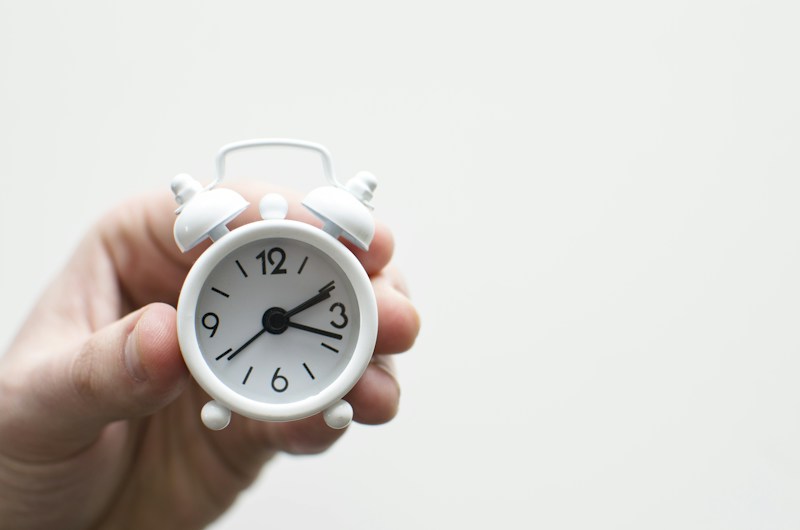
It's Thursday night. The deadline moved up, your landlord still hasn't fixed the heat, and you've had cereal for dinner twice this week. You weren't even thinking about porn. Then the laptop is open, and an hour later you're wondering how you got there.
If your slips cluster in your worst weeks, that's not a coincidence, and it isn't a character flaw. Stress changes who's driving. Researchers have watched it happen in the lab, and once you understand the mechanism, you can plan around it.
The ice-water study: how stress flips you to autopilot
The study, by Lars Schwabe and Oliver Wolf, appeared in the Journal of Neuroscience in 2009. They taught volunteers to perform actions that earned a reward. Some of the volunteers were put under stress in a classic lab way: they had to keep a hand in ice water while someone watched them.
Then the researchers made one of the rewards lose its value, so working for it no longer made sense. The unstressed volunteers noticed and adjusted. The stressed ones kept repeating the learned action anyway, for a prize that was no longer worth anything to them.
Psychologists call the first pattern goal-directed: you weigh what an action will get you. The second is habit: a cue triggers a well-practiced response, and the outcome barely gets consulted. Both systems run all the time. Stress tips the balance toward habit.
That was a simple lab task, not porn. But think about the habit you're trying to step away from. It's been rewarded many times, often late at night, often when you were tired or tense. Under stress, your brain is less likely to run a careful cost-benefit analysis and more likely to reach for the most practiced response on the shelf.
Why stress triggers cravings and relapse
Yale neuroscientist Amy Arnsten explains part of the why. Her 2009 review in Nature Reviews Neuroscience described how even mild stress, if it's uncontrollable, quickly impairs the prefrontal cortex, the region that handles planning and impulse control. Control passes to older, more habitual circuits.
That trade makes sense when a car swerves toward you: you want reflexes, not a list of pros and cons. It's much less helpful at midnight with an email you're dreading. To your stress system, those two moments aren't as different as they should be, so the part of you that remembers your goals gets quieter right when you need it most.
Hold on to the word uncontrollable. You can't control every stressor, but a plan made in advance gives a hard week some handles. More on that below.
Rajita Sinha, who studies stress and addiction at Yale, has found stress to be one of the strongest triggers of craving and relapse across addictive behaviors. Her research isn't about porn specifically, so take it as a strong hint rather than proof. But it fits what many people report: the hardest nights tend to follow the hardest days.
There's also evidence that people use porn to manage stress directly. Beáta Bőthe and colleagues, writing in Psychology of Addictive Behaviors in 2021, mapped eight reasons people watch, from sexual pleasure and curiosity to boredom avoidance. Stress reduction was one of them. It was linked to how often people watched, and it had a weak-to-moderate link with problematic use.
Weak-to-moderate means stress isn't the whole story. Still, for a lot of people porn has been doing a job: a quick, private way to turn the volume down on a bad day. If you remove it and leave the job empty, stress will keep sending you back to the only tool it knows. The rest of this article is about better tools.
Calm the body first: cyclic sighing and a brisk walk
When your prefrontal cortex is struggling, arguing with yourself is a weak strategy. You're asking the impaired part to overrule the loud part. It works better to start with the body, and breathing is the easiest part of the stress response to change on purpose.
In a 2023 study in Cell Reports Medicine, a Stanford team led by Melis Yilmaz Balban compared practices done for five minutes a day over a month. A technique called cyclic sighing improved mood and lowered breathing rate more than the same time spent on mindfulness meditation. It's a single study, but the technique is free and takes minutes. Here's how to do it:
1. Breathe in through your nose until your lungs feel nearly full.
2. Without breathing out, take a second, shorter inhale through your nose to top them up.
3. Breathe out through your mouth, long and slow, until your lungs feel empty.
4. Repeat for a few minutes. The study used five minutes a day.
Slow breathing in general seems to help. A 2018 systematic review in Frontiers in Human Neuroscience by Andrea Zaccaro and colleagues found that breathing slower than 10 breaths a minute, often around six, raises heart rate variability, a marker of a calmer, more flexible nervous system, and is linked to relaxation and less anxiety. You don't need to count precisely. Slow down and let each exhale run long.
Then, if you can, move. A 2013 meta-analysis in Addiction by Haasova and colleagues found that short bouts of exercise reduce cigarette cravings, and in a 2009 study in Appetite, Taylor and Oliver found that a 15-minute brisk walk reduced chocolate cravings. That's smoking and chocolate, not porn, so treat it as an analogy. It's still a cheap experiment, and a walk gets you out of the room where the habit lives.
Plan your hard weeks before they arrive
The awkward part is timing: you need good judgment most at the moment stress has taken some of it away. The fix is to make the big decisions earlier, while your prefrontal cortex is fully online.
A lot of stress is more predictable than it feels. Exams, a product launch, the end of a quarter, a family visit, the anniversary of a breakup. Look at the next month and circle the weeks that will squeeze you. Then plan them the way you'd plan a drive through a storm.
Make the plan specific. Peter Gollwitzer and Paschal Sheeran's 2006 meta-analysis of 94 independent tests found that if-then plans had a medium-to-large effect on reaching goals. For example: “If it's after 10 p.m. during deadline week, then the laptop stays on the kitchen table and I read in bed.” Or: “If I feel that tired-but-wired buzz, then I do five minutes of cyclic sighing before I decide anything.” The if-part matters. It ties the new response to a cue, the same way the old habit is tied to one.
Lower the bar on purpose, too. A brutal week isn't the week to start a strict diet or a new training plan. Protect sleep and meals first, because a tired, underfed brain slides into autopilot more easily.
If you use Firmo90, this is what the Escape Plan is for: your own step-by-step plan for a crisis moment, written on a calm day so the stressed version of you doesn't have to invent one at midnight.
Don't carry a stressful week alone
Stress also tends to isolate. You cancel plans, stop answering texts and spend more evenings alone with a screen. That matters more than it sounds.
What do 10 hours without people do to the brain? Livia Tomova and colleagues at MIT found out by keeping 40 adults in total social isolation for that long, then reported the results in Nature Neuroscience in 2020. Afterward, their midbrain responses to pictures of people socializing looked like their responses to food pictures after a 10-hour fast. Loneliness behaved like hunger: a craving for connection.
On a lonely, stressful night, part of what feels like a sexual urge may be a need for contact in disguise. You can't always fix the stress, but you can usually reach a person. Text a friend you trust, or call someone while you walk. The conversation doesn't have to be about porn; ten minutes about your day still gives you some of the contact you were missing.
None of this asks you to be calmer than you are. It asks you to catch the moment stress starts driving and to have something ready: a breath you know, a walk, a plan you wrote on a better day, a person you can text. Try the sighs once tonight, on an ordinary evening, so the first time isn't in the middle of a bad night.
You do not have to hold this alone.
A counter that counts on its own, a daily check-in, a community by nickname and, if you want, a real same-gender partner. Free to use, on Android and iPhone.
Free to use · No card, no deadline
Keep reading
I Found Out My Husband Watches Pornography: What Now?
What to feel, what to ask and what to do when you find out your partner uses pornography, without destroying the relationship or pretending everything is fine.
ScienceWhat Pornography Does to Your Brain
Dopamine, tolerance and neuroplasticity: what science shows about how pornography rewires the brain and how it recovers when you stop.
WellnessPornography and Self-Esteem: How to Break the Shame Cycle
Why pornography use erodes self-esteem, how the shame and relapse cycle feeds itself and the path to rebuilding yourself.