In this guide
Your plan in 7 steps
Set your terms
Pick a start date, a first goal like 30 or 90 days, and decide in advance what counts as a slip.
Map your triggers
For one week, note the time, place, mood and device each time you feel the pull.
Add friction
Charge your phone outside the bedroom, set SafeSearch to Filter and turn on your phone's content controls.
Write your urge plan
Decide now what you'll do in the ten minutes after an urge hits.
Tell one person
A friend, a mentor or an anonymous accountability partner. Someone you can message before you act.
Track and check in
Count your days and do a short daily check-in, without treating the number as your worth.
Restart the same day
If you slip, close everything, tell your person and start again today.
Why willpower alone keeps failing
If you've quit ten times and gone back ten times, you're not broken. Porn is a habit your brain has practiced hundreds of times: a cue shows up, you reach for the phone, you get a quick reward. After enough repetitions the whole sequence runs on autopilot, usually at the exact moments when you're tired, stressed or bored.
Willpower works best when you're rested and calm, which is rarely when the urge shows up. That's why white-knuckling it tends to last a few days and then fall apart at 1 a.m. The answer isn't to try harder. It's to change the setup: fewer cues, more friction, a plan for the hard minutes and someone who knows what you're doing.
Decide what quitting means for you
Before day one, write down three things. First, the goal: no porn, and for how long you're committing right now. Many people start with 30 or 90 days because a finish line helps. Second, the start date. Today works. Third, what counts as a slip. Does scrolling suggestive posts count? Decide now, while you're calm, so you're not renegotiating the rules at midnight.
Then write one sentence about why. Not why you should quit, but why you want to. "I want to sleep better." "I'm tired of hiding something from her." "I want my evenings back." You'll need it later, when your brain starts arguing.
Find your triggers
A trigger is whatever comes right before the urge. For most people it's a mix of time, place, mood and device: alone in bed with the phone, after an argument, a long empty Sunday, scrolling social media late at night, getting home stressed from work. The urge rarely comes out of nowhere, even when it feels that way.
For the next week, every time you feel the pull, note four things: the time, where you were, how you felt and what device you had in your hand. The pattern shows up fast. Most people find two or three situations behind almost all of their use. Those are where your effort goes first.
- Late at night, in bed, with your phone
- Boredom and empty, unplanned time
- Stress, loneliness or a bad mood
- Drinking
- Scrolling feeds full of suggestive content
- Having the place to yourself
Add friction where it counts: phone, bedroom, late night
You don't need a fortress. You need enough friction that acting on an urge takes longer than the urge lasts. The biggest change for most people is getting the phone out of the bedroom. Charge it in the kitchen and buy a cheap alarm clock. If the phone isn't within reach at midnight, a whole category of relapses disappears.
Then use what your devices already have. Set Google SafeSearch to Filter. On iPhone, Screen Time has Content & Privacy Restrictions, where you can limit adult websites in Safari. Many Android phones, browsers and home routers have content filters too. None of this is unbreakable, and it doesn't need to be. It buys you the few minutes you need to choose.
What to do when an urge hits
Urges feel like they'll last forever, but they behave more like waves: they build, peak and fade, usually within minutes, as long as you don't feed them. Psychologists call riding them out urge surfing. Your only job is to get through the peak without opening anything. Here's a plan for the next ten minutes:
- Name it: this is an urge, and it will pass
- Leave the room you're in, especially if it's the bedroom
- Move: 20 push-ups, cold water on your face or a fast walk
- Text someone, even just "rough moment"
- Read the reason you wrote down
- Put the phone in another room until the ten minutes are up
The point is to act before you start negotiating. Once you're debating whether a quick look counts, you're already halfway in. Keep the plan physical and a little boring, and practice it on the easy urges so it's automatic on the hard ones.
Don't do it alone
Porn runs on secrecy. When nobody knows, nothing stands between you and the next relapse, and the shame afterward keeps you quiet, which sets up the one after that. Telling one person breaks that loop. It doesn't have to be a big confession. "I'm trying to quit porn, can I text you when it gets hard?" is enough.
That person can be a friend you trust, someone else who's quitting, a mentor or a counselor. If there's honestly nobody you can tell, an anonymous accountability partner is a good way in. Our accountability partner guide covers who to pick and how it works.
Track your days without living for the number
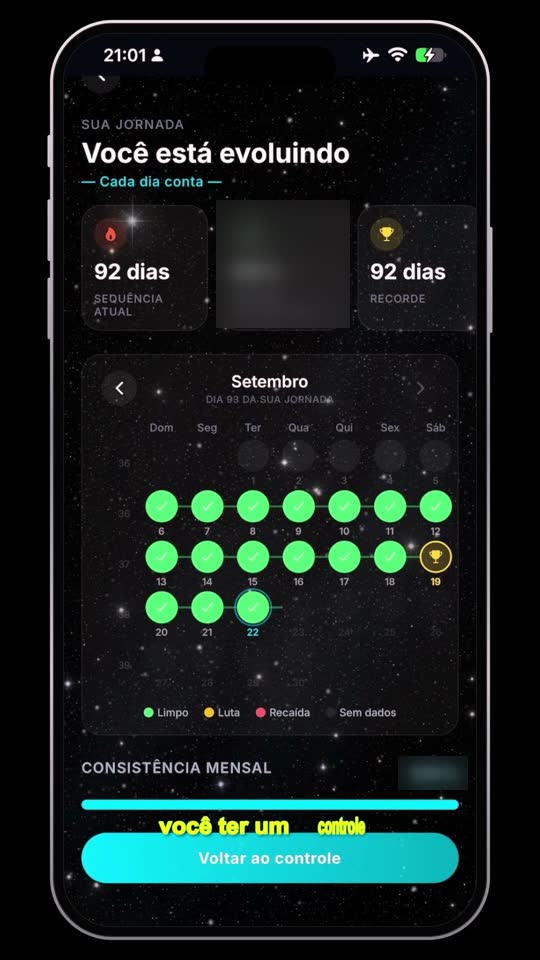
A streak counter helps. Watching day 12 turn into day 13 is real motivation, and it shows you patterns: maybe you always struggle around day 9, or every Friday night. A quick daily check-in on your mood and energy adds the why behind the numbers.
The trap is making the number your identity. If day 40 becomes day 0 and it feels like you lost everything, that despair is exactly what turns one slip into a lost weekend. The days you stayed clean still happened. Use the counter as a tool, not a verdict.
If you slip, restart the same day
Many people slip at some point. What decides where you end up is what you do in the next few hours. Don't treat the slip as permission to give up for the week. Get up, change rooms, write down what led to it and tell your person. Then start again today, not on Monday. Our porn relapse guide walks through the first hours step by step.
How Firmo90 helps
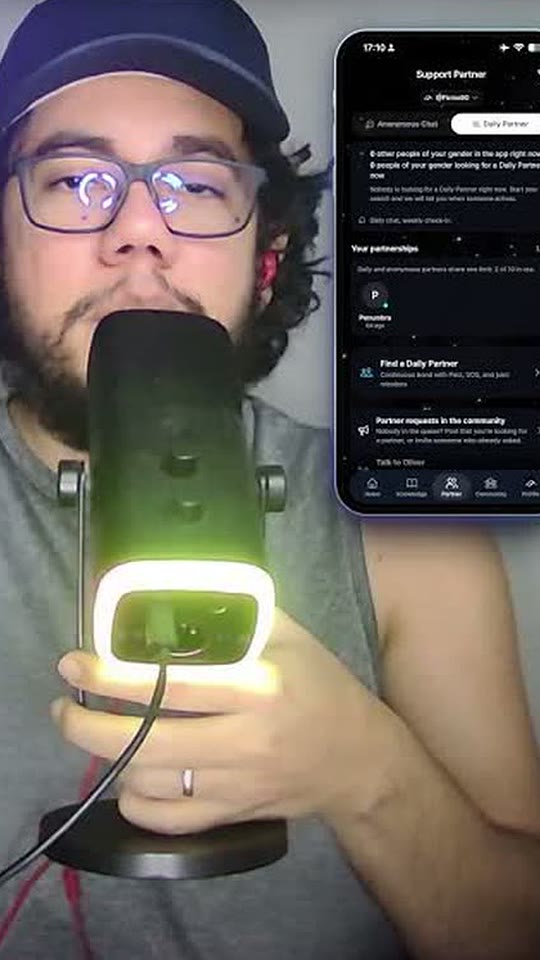
Firmo90 is an app for people who decided to quit porn. The free account gives you a counter that counts on its own, a daily check-in, neuroscience articles, reading the community with daily limits, and one accountability partner and one Anonymous Chat at a time, with SOS to your partner. You create it with no card and show up under a nickname.
Premium, inside the app, raises that to up to 10 partners in total, daily and anonymous, and adds the full journal, Oliver, the AI assistant, more clans and connections, full statistics and no ads. Partners are always the same gender, and the other person has to accept. If you slip, you log it: the streak restarts, but your history and record stay, and your journal, level and points aren't reset. Firmo90 doesn't install a blocker, so pair it with SafeSearch or your phone's own controls.
Common questions
How long does it take to quit porn?
There's no fixed number. Many people find the first two weeks the hardest and things feel easier after a month or two, but it varies with how long and how often you used, your stress, your sleep and your support. Think of it as building a new routine, not serving a sentence.
Can I quit porn on my own?
Some people do, but most find it much harder alone. Secrecy is part of what keeps the habit going, and willpower tends to give out at the worst moments. You don't need a group or a therapist to start, but telling at least one person, or finding an anonymous accountability partner, makes a real difference on the hard nights.
Do I have to stop masturbating too?
Not necessarily. For many people masturbation is a normal part of sexuality. Some choose to pause it for a while at the start because for them it leads straight back to porn or porn fantasies. Others don't need to. Pay attention to what happens for you: if masturbating keeps ending with the browser open, take a break from it. If it doesn't, focus on the porn.
Do porn blockers work?
They help as friction, but they won't do the job alone. A blocker or content filter can stop the impulsive click and buy you a few minutes, which is often all you need. Anyone determined can get around them, though, so they work best alongside an urge plan and someone to talk to. Firmo90 doesn't install a blocker. SafeSearch and your phone's built-in controls are a good place to start.
What should I do when the urge hits late at night?
Get out of bed and out of the room. Late at night in bed with a phone is the most common setup for a relapse, so your first move is physical: stand up, turn on the light, go to the kitchen, drink some water. If you're still wired, read your reason for quitting or text someone. Then go back to bed and leave the phone charging in another room.
Is cutting back better than quitting cold turkey?
It depends on you. Some people do well cutting back gradually, setting limits and shrinking them. Others find any use keeps the cravings alive, and a clean stop is simpler because there's nothing left to negotiate. If you've tried cutting back several times and it keeps creeping up again, a clear stop with a set number of days is worth trying. A counselor can help you decide.