In this guide
What an accountability partner is
An accountability partner is a person who agrees to stand with you while you quit porn. You tell them the truth about how it's going, they check in on you, and you reach out when things get hard. They're not your therapist, your parent or a police officer. They're someone in your corner.
Many partnerships go both ways: two people quitting at the same time who back each other up. That tends to work well, because each of you knows what the other is going through and nobody is only on the receiving end.
Why quitting with someone beats going alone
Porn depends on secrecy. When nobody knows, the only thing between you and a relapse is willpower, and willpower is weakest exactly when urges are strongest: late, tired, stressed, alone. Afterward, shame keeps you quiet, and isolation sets up the next round.
A partner breaks both sides of that. Knowing someone will ask how your week went changes how you act on Thursday night. Having someone to text while an urge is building gives you a real option in the moment. And once the problem is said out loud to one person, it loses some of its hold.
Who to pick (and who not to)
A good partner is someone you can be honest with, who keeps things private and won't panic or lecture. That could be a close friend, someone else who's quitting, a mentor, or a pastor if faith is part of your life. Same gender usually works best, because the conversations get personal.
Many counselors and ministries advise against making your wife, husband or girlfriend your accountability partner, and we agree. They deserve your honesty, but they're too hurt by the problem to hear about every urge, and it can turn the relationship into supervision. Be honest with them, and get day-to-day accountability from someone else.
- Someone you trust to keep it private
- Someone who will check in, not just wait for you
- Someone who won't shame you after a slip
- Ideally someone who's been there or is quitting too
What you agree on
A partnership works best with a few clear agreements up front, so nobody has to guess what's expected or feel awkward bringing things up later. Talk these through in your first conversation, even if it feels a bit formal, and write down what you decide:
- How often you check in: a daily text, a weekly call, or both
- What you report: urges, close calls, slips and how you're feeling
- What happens when an urge hits: you message, they answer when they can
- How you'll handle a relapse: you tell them within a day, and they don't lecture
- What stays between the two of you
- When you'll check whether the arrangement is working
Keep it simple. A short daily message beats an ambitious plan that falls apart in a week. You can always add more later. What matters most is that you both keep showing up, especially in the weeks when one of you would rather go quiet.
When there's nobody you can tell
For a lot of people this is the real obstacle. You're afraid of how a friend would look at you, or nobody is close enough, or the people around you would talk. That fear is common, and it's one of the reasons so many people try to quit alone for years.
An anonymous partner is a way in. Someone fighting the same thing, who doesn't know your name or your friends, can be easier to be honest with. For many people it's the first time they've told anyone at all, and it often makes it easier to open up to someone in their own life later.
How the partner works on Firmo90
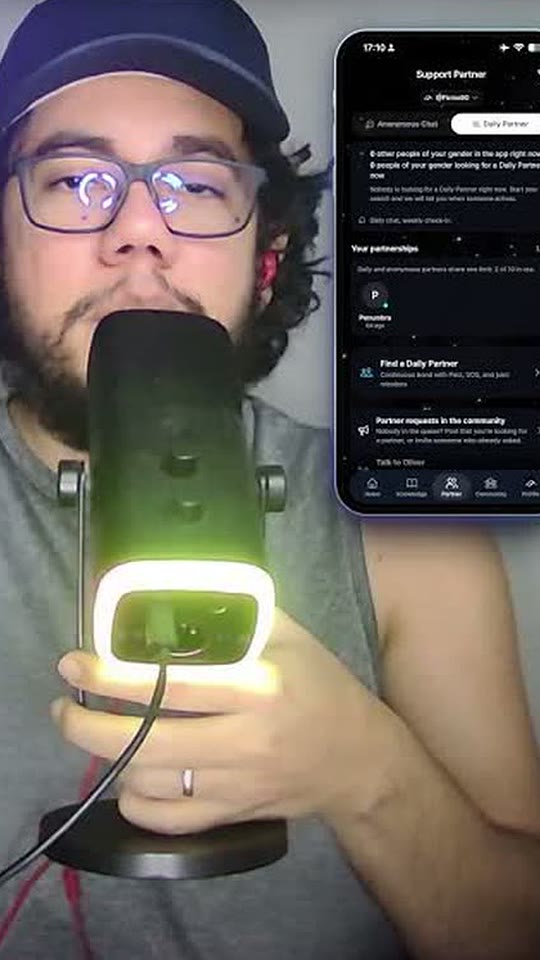
On Firmo90 you join the partner queue when you're ready, and the other person has to accept. Pairing is always same-gender. There are two ways to do it: the Anonymous Chat, seven days with your identity protected, and the ongoing partner, one person to walk with you for longer.
Your real name isn't shown. In Anonymous Chat you appear under a generated codename, and with an ongoing partner, under your account nickname. If you have a partner, one tap sends the SOS and opens the conversation, so reaching out in a hard moment takes seconds instead of a long message you'll talk yourself out of sending.
How to be a good partner back
If it goes both ways, your part matters as much as theirs. Listen more than you advise. Don't play detective or ask for proof. When they slip, skip the lecture and ask what happened and what they need. Notice the wins too: a hard week they got through, a night they texted instead of giving in. And be honest about your own struggles, because that's what makes it safe for them to be honest with you.
Common questions
What is an accountability partner for porn?
It's someone who knows you're trying to quit porn and agrees to check in with you regularly. You tell them how it's going, reach out when an urge hits and talk honestly about slips. They're not there to judge or police you. The point is that you're no longer carrying it alone and in secret, which is what keeps the habit going.
Should my wife be my accountability partner?
Usually not, and many counselors and ministries say the same. Your wife deserves honesty, and you shouldn't hide the problem from her. But she's hurt by it, and making her the one who hears about every urge can turn your marriage into supervision. Be honest with her, and get day-to-day accountability from a trusted friend, a mentor or someone else who's quitting.
Where can I find an accountability partner online?
Look for a place built for it, where other people are quitting too and privacy is taken seriously. Recovery groups and some apps connect people anonymously. On Firmo90 you join a queue, the other person accepts, and pairing is always same-gender, either as a seven-day Anonymous Chat or as an ongoing partner. The free account includes one partner at a time, and Premium raises that to up to 5.
Is there a free accountability partner app?
Yes, to start: the free account includes one partner at a time, with SOS. Premium raises that to up to 10 partners in total, daily and anonymous. On Firmo90 the other person has to accept, and pairing is always same-gender, either as a seven-day Anonymous Chat or as an ongoing partner. A friend you trust can be a great accountability partner too, with nothing more than daily texts and a weekly call.
Will my partner know who I am?
Not unless you decide to tell them. On Firmo90 your real name isn't shown. In Anonymous Chat you appear under a generated codename, and with an ongoing partner, under the nickname you picked for your account. You choose what to share about yourself, and you can keep it to what you're going through.
Do I have to tell my partner if I relapse?
No one can make you, but it's the most useful thing you can do. A partnership only works if it's honest, and hiding a relapse brings back the secrecy you were trying to get away from. You don't need every detail. "I slipped last night, I'm starting again" is enough. A good partner will help you figure out what happened, not judge you.